
AlphaFold 3 architecture described in Nature paper
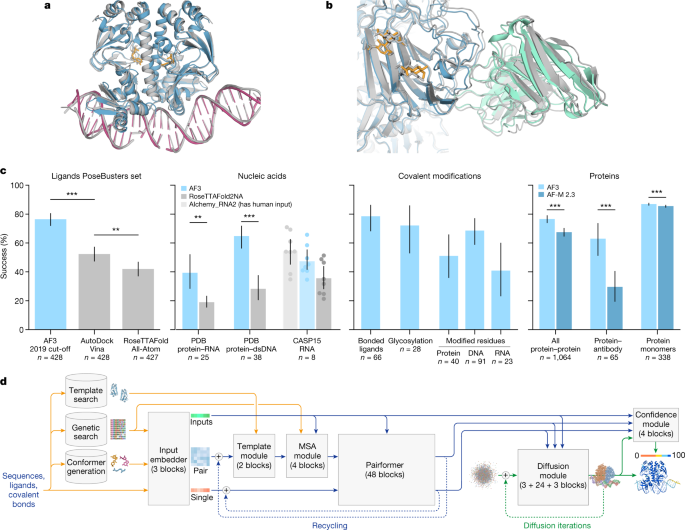
DeepMind and collaborators published AlphaFold 3 in Nature, laying out a diffusion-based architecture that predicts the joint structure of complexes containing proteins, nucleic acids, small molecules, ions and modified residues. The authors reported far greater accuracy for protein-ligand interactions than state-of-the-art docking tools manage, plus much higher accuracy for protein-nucleic acid interactions compared with predictors built specifically for nucleic acids. Antibody-antigen prediction also improved over AlphaFold-Multimer v2.3. An addendum to the article was published on 27 November 2024.
A single model that predicts such a range of biomolecular complexes could aid research into cellular function and therapeutic design, though it remains a computational method, not a treatment.
Written by the Genomes desk from the primary source cited and linked above and checked against it. Research use only; not medical advice. Corrections: [email protected].