
Engineered bacteria bioleach olivine and store carbon as oxalate
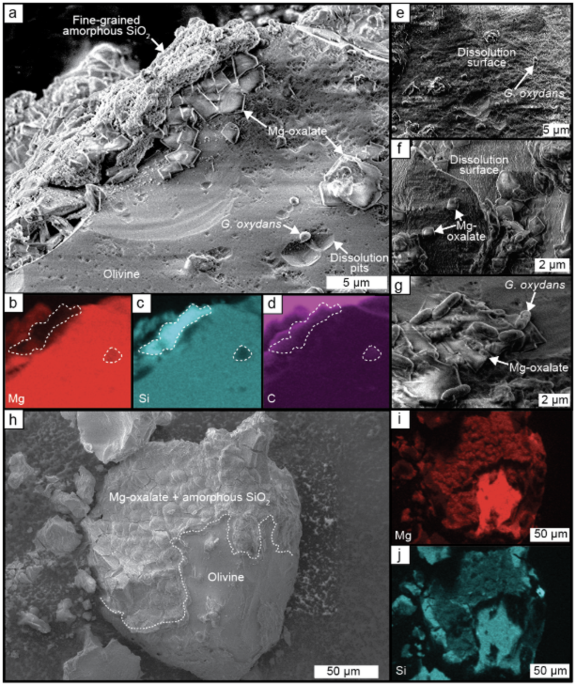
Researchers used a genetically engineered strain of Gluconobacter oxydans (B58, deltapstS, P112:mgdh) to bioleach olivine and enstatite rock at 30 degrees Celsius, as reported in Scientific Reports. Direct contact between the bacteria and mineral improved iron oxidation and leaching over a cell-free biolixiviant, and the bacteria produced oxalic acid that formed solid magnesium oxalate. Mass balance calculations showed the strain leached up to 75 percent of magnesium from the starting rock, but only 11 percent of that leached magnesium converted to magnesium oxalate after 15 days.
The approach could aid engineered carbon dioxide removal, but conversion efficiency remains low and the work needs further study before real-world use.
Written by the Genomes desk from the primary source cited and linked above and checked against it. Research use only; not medical advice. Corrections: [email protected].