
Human gene-regulation map ties cartilage changes to joint disease risk
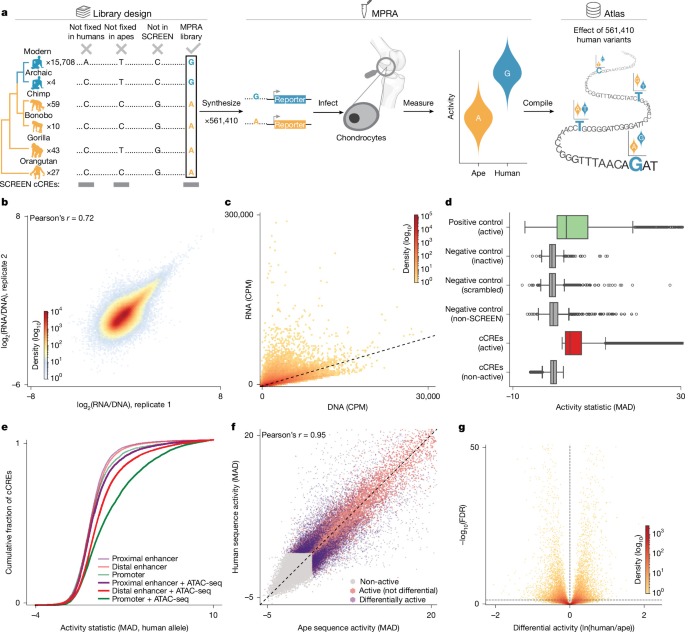
Researchers tested 561,410 human-derived sequence substitutions in chondrocytes and found regulatory changes tied to human skeletal evolution, according to a paper in Nature. In human-ape hybrid cells, the team identified 15,077 loci with human-specific regulatory activity, many of which suppressed glycosaminoglycan biosynthesis in osteochondral progenitors. The shift left signatures of selection. Joint glycosaminoglycan content in humans came out roughly three-to-fourfold lower than in non-human apes. The authors write that the changes probably explain why humans are prone to degenerative skeletal disease.
For clinicians treating degenerative joint disease, the maps offer a cellular explanation for how human-specific gene regulation drives cartilage loss.
Written by the Genomes desk from the primary source cited and linked above and checked against it. Research use only; not medical advice. Corrections: [email protected].