
KDM2B enzyme found essential in aggressive medulloblastoma subtypes
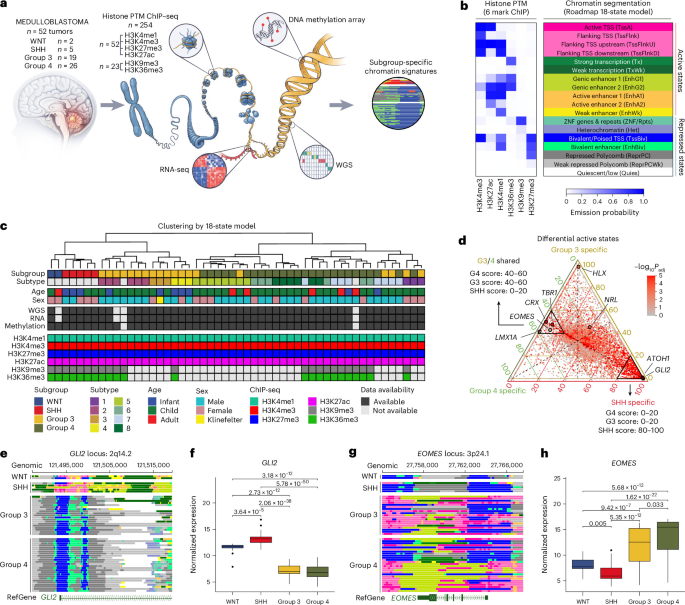
Researchers at St. Jude Children’s Research Hospital mapped chromatin states across medulloblastoma subgroups. They identified a bivalent enhancer signature concentrated at promoters of neurodevelopmental genes in Group 3 and Group 4 tumors, the aggressive forms of this childhood cerebellar cancer. KDM2B bound selectively at those enhancer regions. CRISPR knockout or acute protein degradation of KDM2B suppressed tumor growth in cell cultures and animal models. The protein appears to recruit Polycomb repressive complexes that block neuronal differentiation. The study was published in Nature Genetics.
The finding points to KDM2B as a potential drug target for children with high‑risk Group 3 or Group 4 medulloblastoma, although inhibition has only been tested in laboratory and animal studies.
Written by the Genomes desk from the primary source cited and linked above and checked against it. Research use only; not medical advice. Corrections: [email protected].