
Multiancestry biobank data sharpens polygenic risk scores for underrepresented groups
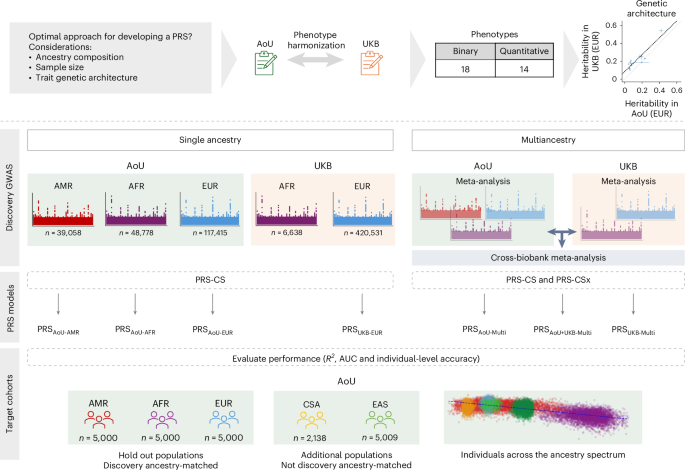
A study published in Nature Genetics found that polygenic risk scores trained on data from both the All of Us Research Program and the UK Biobank predict complex traits more accurately for underrepresented ancestry groups, though the combined approach was not always superior. Researchers built multiancestry scores for 32 traits and diseases using 245,388 whole-genome sequences from Version 7 of the All of Us data release. For less polygenic traits, All of Us-only training outperformed the larger meta-analyzed dataset in African ancestry participants, a pattern the authors attribute to ancestry-enriched genetic effects.
People from ancestries underrepresented in historical genomic studies have long received less reliable genetic risk estimates. This evidence gives biobank programs a concrete case for broadening diverse recruitment, and clinicians a reason to scrutinize which training population underlies any polygenic score they use.
Written by the Genomes desk from the primary source cited and linked above and checked against it. Research use only; not medical advice. Corrections: [email protected].