
New model uses species trees to predict variant effects across genomes
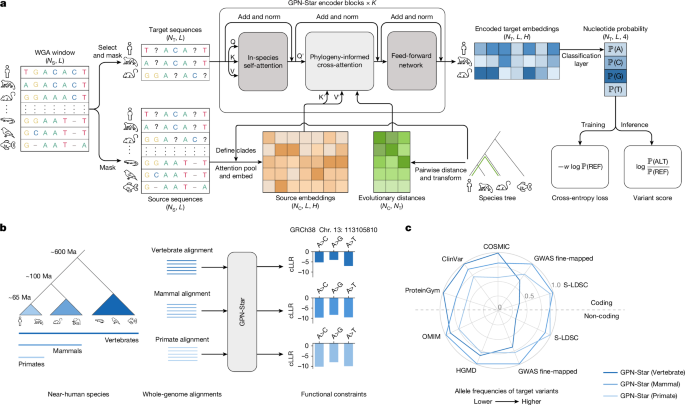
A genomic language model called GPN-Star predicts the functional impact of genetic variants by using whole-genome alignments and species trees to model evolutionary relationships. The tool, described in Nature, was trained on vertebrate, mammal, and primate alignments. It outperformed existing methods at identifying pathogenic variants and prioritizing signals from genome-wide association studies. The model improved power in rare variant association testing and showed strong enrichment for complex trait heritability. Analyses across timescales revealed that modeling more recent evolution works better for some tasks, while deeper evolution helps others. The authors trained versions for mouse, chicken, fruit fly, C. elegans, and A. thaliana, demonstrating the framework works across species.
Human geneticists and clinical researchers gain a more accurate tool for interpreting genetic variants in patients.
Written by the Genomes desk from the primary source cited and linked above and checked against it. Research use only; not medical advice. Corrections: [email protected].