
AAV gene therapy lowers bleeding rate in adolescents with hemophilia B, trial finds
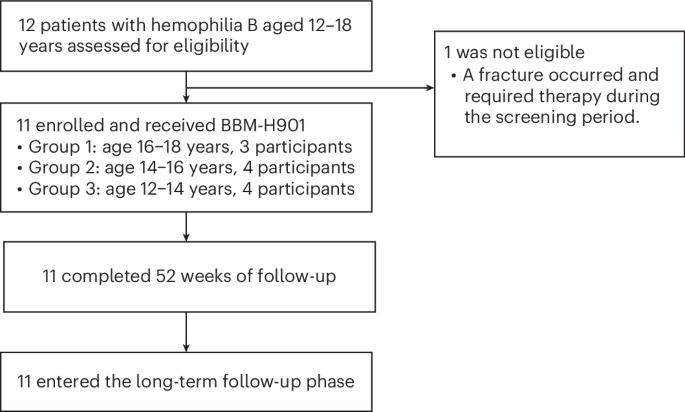
Eleven adolescents with hemophilia B in China received the AAV gene therapy BBM-H901 in a phase 1 trial, Nature Medicine reports. None had dose-limiting toxicity. The most common side effects were rises in white blood cell counts and rash linked to corticosteroid use; one participant had a serious adverse event. Liver enzymes rose in one participant and returned to normal after 4 weeks of immunosuppressive therapy. After 52 weeks of follow-up, the mean annualized bleeding rate fell from 13.9 to 0.5, the researchers report.
Adolescents with hemophilia B could gain access to a treatment tested mainly in adults, if larger trials confirm safety.
Written by the Genomes desk from the primary source cited and linked above and checked against it. Research use only; not medical advice. Corrections: [email protected].