
New method makes over 1,000 gene fragments in one shot
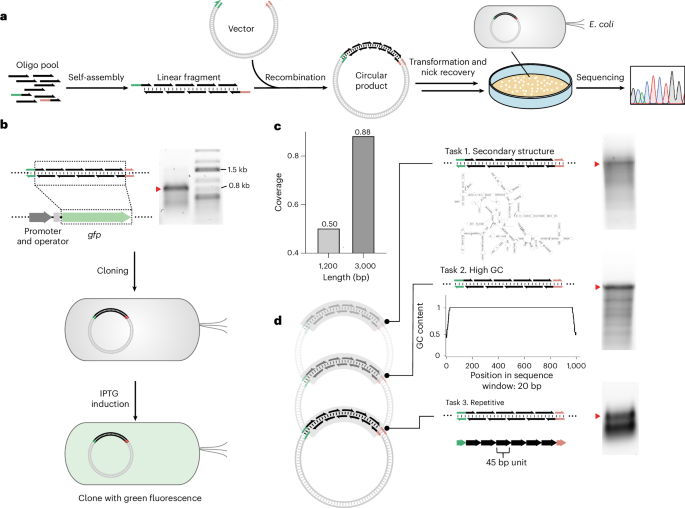
A team has described Molecular Self-Assembly Induced Cloning, a gene synthesis method that pairs in vitro hybridization of overlapping DNA segments with the DNA repair machinery inside host cells, in a paper published in Nature Biotechnology. Using microchip-based oligonucleotide synthesis, the method produced more than 1,000 distinct gene fragments in a single one-pot reaction, with near-zero misalignment. The researchers also built large variant libraries of the industrial enzyme PETase and found variants more potent than the standard version of the enzyme.
Gene synthesis has long been held back by cost and errors. This result comes from laboratory experiments, not any clinical application, but it could ease that barrier.
Written by the Genomes desk from the primary source cited and linked above and checked against it. Research use only; not medical advice. Corrections: [email protected].