
New tool inserts DNA fragments up to 6.5 kb into human cells
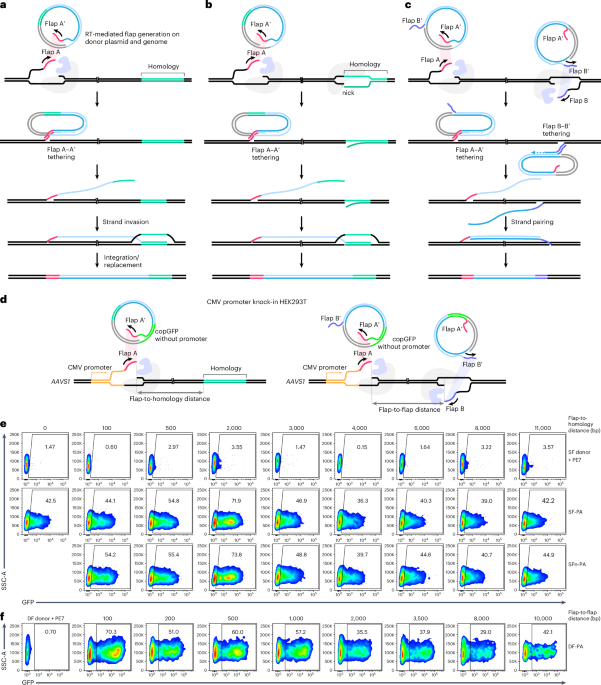
Researchers adapted prime editors to build prime assembly, a method that generates matching 3′-flaps on both genomic DNA and donor fragments so they can anneal and integrate without needing homology-directed repair. The tool accepted plasmid and linear donors from 1.0 to 6.5 kb. In HEK293T cells, it replaced a 2.9-kb endogenous sequence with 57.8% efficiency, according to a report in Nature Biotechnology. Integrated fragments were more than 90% accurate. The team achieved 28.1% efficiency for site-specific CAR integration in primary human T cells. Hydrodynamic injection in mice produced 4.3% integration in GFP-positive hepatocytes.
The technique provides a way to correct large deletions and structural variants in patients without depending on homology-directed repair.
Written by the Genomes desk from the primary source cited and linked above and checked against it. Research use only; not medical advice. Corrections: [email protected].