
Polygenic risk score for Alzheimer's performs across ancestry groups
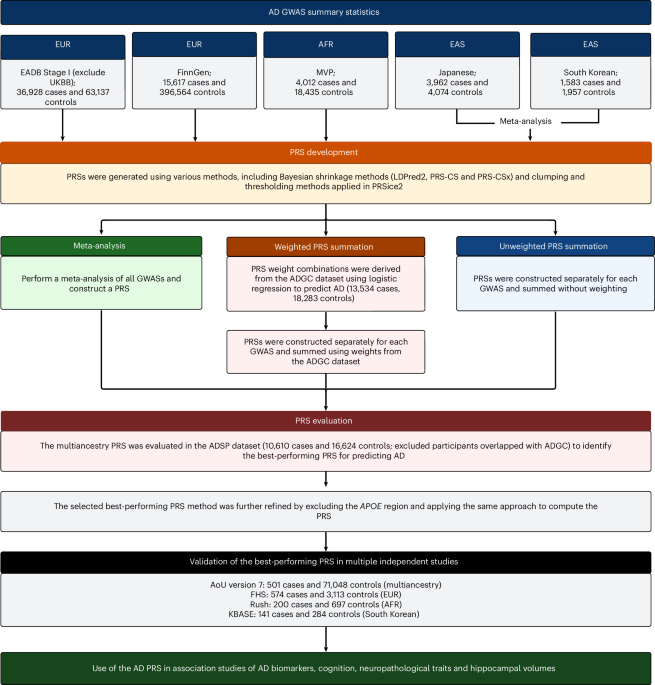
A polygenic risk score for Alzheimer's disease, built without the APOE gene and trained on European, African American, Caribbean Hispanic and East Asian genome-wide association data, predicted disease risk in multiple populations. Published in Nature Genetics, the score returned adjusted odds ratios of 1.14 to 1.52 per standard deviation in a large independent multiancestry dataset. Replication cohorts confirmed the effect, with odds ratios of 1.21 to 1.65. The score also tracked with worse memory, executive function and language performance, greater neuropathological burden, smaller hippocampal volume, lower cerebrospinal fluid amyloid-β42 and higher total tau and phosphorylated tau. Women had stronger phosphorylated tau associations.
The score may help stratify risk in populations that have been underserved by European-ancestry-derived tools.
Written by the Genomes desk from the primary source cited and linked above and checked against it. Research use only; not medical advice. Corrections: [email protected].