Patient-derived teratomas tested for dystrophin restoration in Duchenne muscular dystrophy
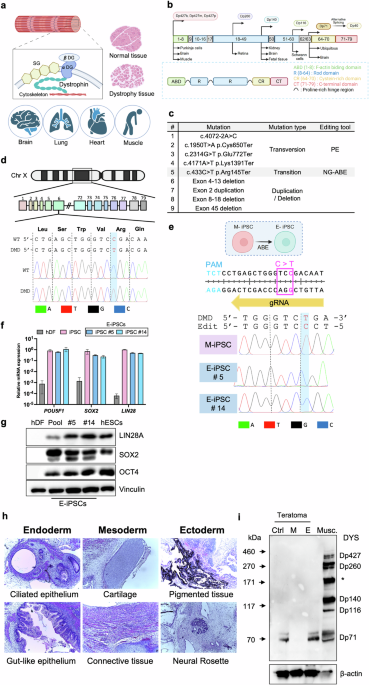
Patient-derived teratomas that include skeletal muscle-like tissue served as a humanized platform to test dystrophin restoration, the study reports in Experimental & Molecular Medicine. Myogenic progenitors corrected with a base editor were transplanted into the teratomas and produced partial restoration of shorter dystrophin isoforms. Separate experiments delivered adenine base editor mRNA in lipid nanoparticles, achieving dose‑dependent editing and restoration of isoforms such as Dp71. Full‑length Dp427m appeared only in a minority of secondary teratomas that showed enriched muscle differentiation, indicating further optimization is needed.
The model gives preclinical groups working on Duchenne muscular dystrophy gene therapies a human‑derived system to assess exon‑skipping and base‑editing outcomes, even though reproducible recovery of full‑length Dp427m was not observed.
Written by the Genomes desk from the primary source cited and linked above and checked against it. Research use only; not medical advice. Corrections: [email protected].