
Whole-exome sequencing identifies 36 risk genes for obsessive-compulsive disorder and chronic tic disorders
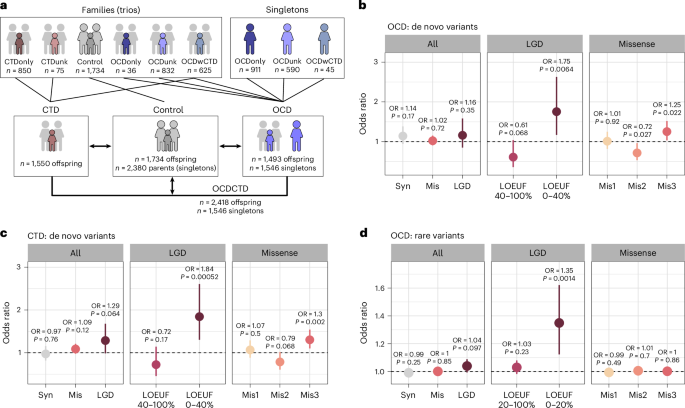
Researchers analyzed whole-exome sequencing data from 3,964 individuals with obsessive-compulsive disorder, chronic tic disorders or both. The cohort included 2,418 parent-child trios. They found 36 high-confidence risk genes at a false discovery rate below 0.1, published in Nature Neuroscience. Four of the genes had been identified previously: CELSR3, CHD8, SCUBE1 and WWC1. Four others overlap with OCD genome-wide association study loci: BRWD1, CELSR3, QRICH1 and SYNE1. Cases showed an excess of de novo and rare protein-damaging mutations. Transcriptomic and network analyses found increased risk gene expression in postnatal cerebellum, prenatal and postnatal cortex, and striatum. Risk genes are shared among OCD, chronic tic disorders and other neurodevelopmental conditions.
The findings offer concrete molecular targets for researchers working to understand the biological pathways behind tics and compulsive behaviors. They may eventually point to novel treatments.
Written by the Genomes desk from the primary source cited and linked above and checked against it. Research use only; not medical advice. Corrections: [email protected].