
Lineage barcodes track how lung tumors rewire their surroundings in mice
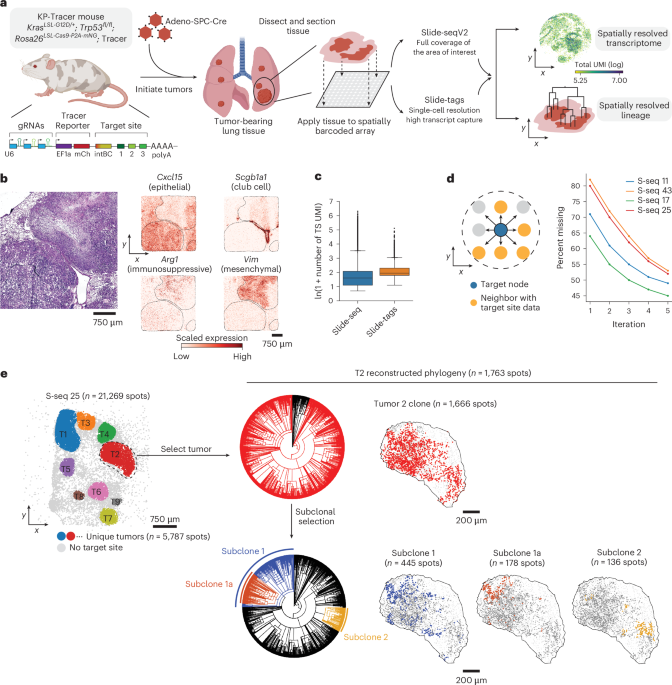
Researchers paired spatial transcriptomics with evolving lineage-tracing barcodes to watch tumor cells expand and migrate in a Kras;Trp53 mouse model of lung adenocarcinoma. The work, published in Nature Genetics, shows that subclonal expansion built hypoxic, immunosuppressive and fibrotic pockets where prometastatic cancer cell states emerged. Metastases arose from spatially confined subclones in the primary tumor. Those traveling cells then remodeled distant sites into fibrotic, collagen-rich environments. The team used tumor phylogeography to map which intercellular interactions changed as the niche expanded, then tested how hypoxia and cell-cell contact shifted cancer cell state in co-culture.
The dataset gives oncology labs high-resolution maps of how local tissue structure and subclone geography drive invasive cell states in a lung cancer model.
Written by the Genomes desk from the primary source cited and linked above and checked against it. Research use only; not medical advice. Corrections: [email protected].